
Electrical Problems Diagnosed and Fixed On Site
Electrical repair service in New Haven for outlets, switches, fixtures, and inspection items in rental properties and homes preparing for sale
Electrical repair needs in older New Haven rental properties and homes going through pre-sale inspection tend to cluster around a specific set of items: outlets that have stopped functioning, switches wired incorrectly, light fixtures that need replacement, and GFCI protection that was either never installed or has failed. Shock Force Electrical and More handles electrical repairs in New Haven for homeowners, property managers, and realtors, addressing these items on site with bonded and insured work. The construction and electrical background behind every repair means the crew recognizes when a single failed outlet is a standalone fix and when it is a symptom of a wiring issue further upstream.
Every repair begins with an on-site evaluation to confirm scope and materials before work starts. That step matters because the visible problem—an outlet that does not work, a switch that does not respond—does not always reflect the actual cause. A dead outlet on a circuit that also feeds a GFCI device elsewhere on the same run will not respond to outlet replacement until the tripped GFCI is identified and reset or replaced. Evaluating the circuit before replacing components is what keeps repairs from being done twice. After the repair or replacement is complete, all work is tested before the crew leaves. Electrical work is performed only in areas and municipalities where no licensing is required.
To schedule an on-site evaluation for an electrical repair issue at your property, call Shock Force Electrical and More at (260) 268-3093.
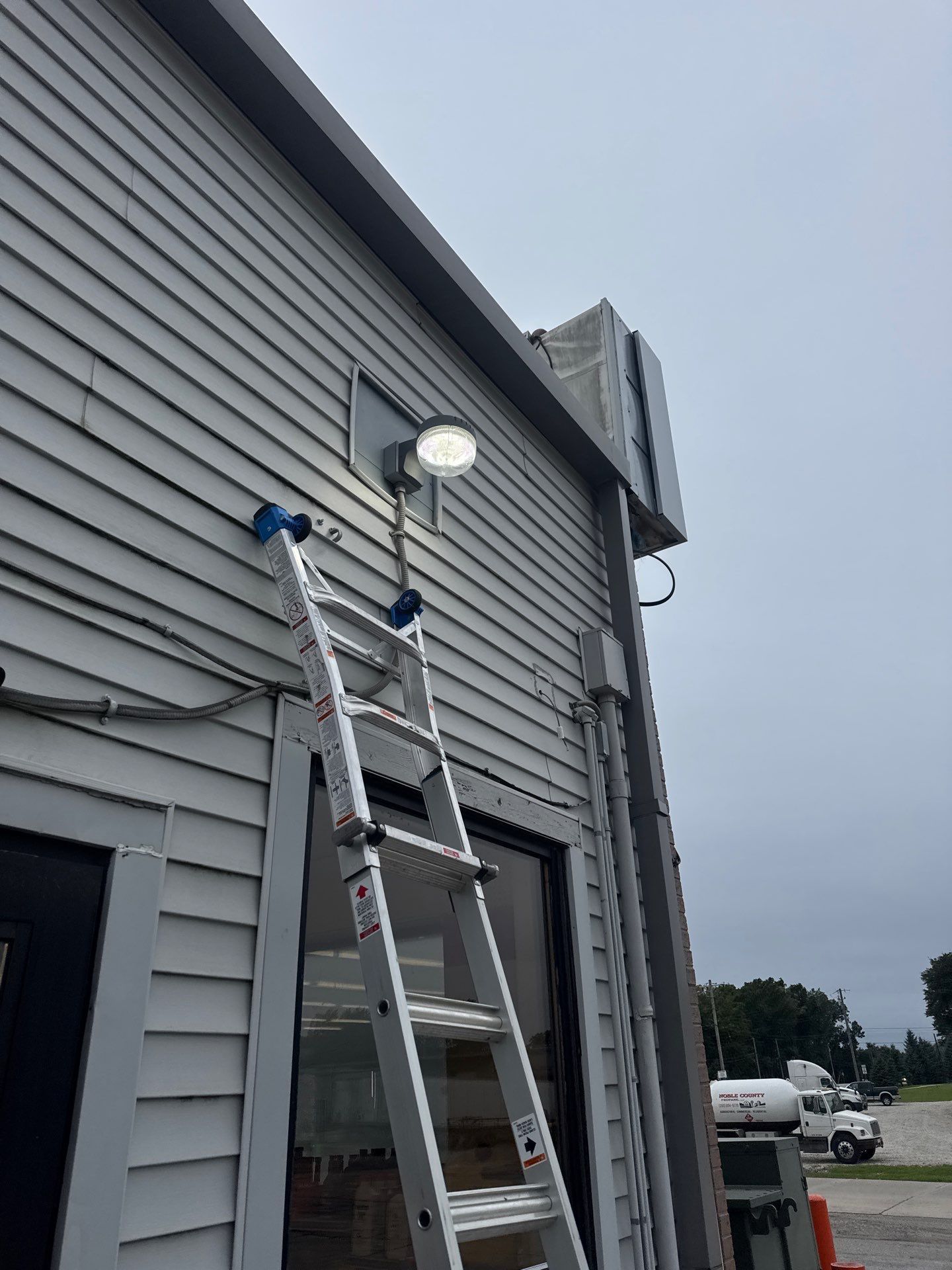
How Electrical Repairs Are Evaluated and Completed
Outlet and switch repairs involve identifying whether the problem is at the device itself, at the wiring connections behind it, or at a point earlier in the circuit—a tripped GFCI, a loose neutral at a junction, or an overloaded breaker. The evaluation step uses a non-contact voltage tester and outlet tester to identify where power is and is not present before any covers are removed or devices replaced. That sequence keeps the repair focused on what is actually failing rather than replacing components based on where the symptom shows up.
After repairs are complete, the affected circuit is tested at each device to confirm power, polarity, and ground continuity. For inspection-flagged items, that confirmation is what property managers and realtors need documented before a re-inspection is scheduled. Property managers overseeing rental units in New Haven rely on repairs being completed and verified without requiring a return visit to address something that was not fully resolved the first time.
Common repair work includes outlet replacement, GFCI installation in kitchens and bathrooms, switch repair or replacement, light fixture removal and installation, and troubleshooting circuits that have stopped functioning. Shock Force Electrical and More is bonded and insured, and all electrical work is performed only in areas and municipalities where no licensing requirement applies.
Common Questions About This Service
These questions address how electrical repairs are evaluated and performed—what the on-site process involves, how circuit problems are traced, and what you can check once the work is complete.
How does the crew determine whether a dead outlet is a device failure or a circuit problem?
A non-contact voltage tester confirms whether power is present at the outlet box before the device is removed—if power is present at the wiring but not at the outlet face, the device is the failure point. If power is absent at the box, the problem is upstream, and the circuit is traced back to identify the cause before any replacement is made.
What is a GFCI outlet and why does it affect other outlets on the same circuit?
A ground fault circuit interrupter outlet monitors current flow and trips when it detects an imbalance, cutting power to protect against shock hazard. In many New Haven homes, a single GFCI outlet installed at the start of a bathroom or kitchen circuit is wired to protect all outlets downstream on that run—when it trips, every outlet it protects loses power, which is why a non-functioning outlet in another room can sometimes be restored by locating and resetting a GFCI device elsewhere.
How is a light fixture replacement performed safely?
The circuit breaker for the fixture circuit is confirmed off using a non-contact tester at the fixture wires before any connections are touched. The existing fixture is disconnected, wiring is inspected for condition and correct identification, and the new fixture is connected with wire nuts to matching conductors before the canopy is secured and the circuit is restored and tested.
Why does electrical work in older rental properties often involve more than one item per visit?
Rental properties in New Haven that have not had electrical updates since original construction often have multiple outlets and switches from the same era, and a home inspection typically flags all of them in the same report. Addressing them in a single visit rather than one item at a time is more efficient for property managers and reduces the number of access coordination events required.
What can you verify yourself after an electrical repair is complete?
After outlet work, an inexpensive outlet tester—available at hardware stores—confirms correct wiring polarity and ground continuity at each device that was repaired or replaced. For GFCI outlets, the test and reset buttons on the face of the device are pressed to confirm that the protection function is working before the device is considered complete.
Shock Force Electrical and More provides electrical repair services in New Haven for property managers, realtors, and homeowners addressing outlet, switch, fixture, and inspection repair items. All work is bonded and insured. Call (260) 268-3093 to arrange an on-site evaluation for your property. Shock Force Electrical and More also performs
electrical repairs in Monroeville, Grabill, Woodburn, Hoagland, and Leo-Cedarville.